 DesignFlux Team
“Can you make it pop?” Every designer has heard it, and every client has felt the frustration of getting back something that wasn’t quite what they imagined.
The fix is almost always the same: a better brief. A clear brief is the single biggest factor in how quickly you get a design you love. It cuts revision rounds, saves time on both sides and makes the result more effective.
Here’s how to write one.
Start with the goal, not the design
Before describing how something should look, explain what it needs to do.
- Weak: “We need an Instagram post about our sale.”
- Strong: “We need an Instagram post that drives existing followers to our weekend sale. 30% off all shoes, ends Sunday.”
When a designer knows the goal, they can make smart decisions about hierarchy, color and layout that you may not have thought to ask for.
Describe your audience
Who will see this design? A post for first-time visitors looks very different from an email to loyal customers. Include:
- Who they are (age range, role, industry)
- What they care about
- Where they’ll see it (phone, desktop, print, trade show)
Give the essentials
Every brief should include the practical details a designer can’t guess:
- Format and size: e.g. 1080 × 1350 Instagram post, A5 flyer, 16:9 slide deck
- Copy: the exact headline, body text and call-to-action
- Must-have elements: logo, product photos, QR code, legal text
- Deadline: when you need it, and when you’ll be available to give feedback
Share inspiration and what to avoid
Visual references are worth a thousand words. Send two or three examples of designs you like, and say what you like about each one: the colors, the layout, the mood.
Just as useful: examples of what you don’t want. “Nothing too corporate” means different things to different people, but a screenshot makes it clear.
Point to your brand assets
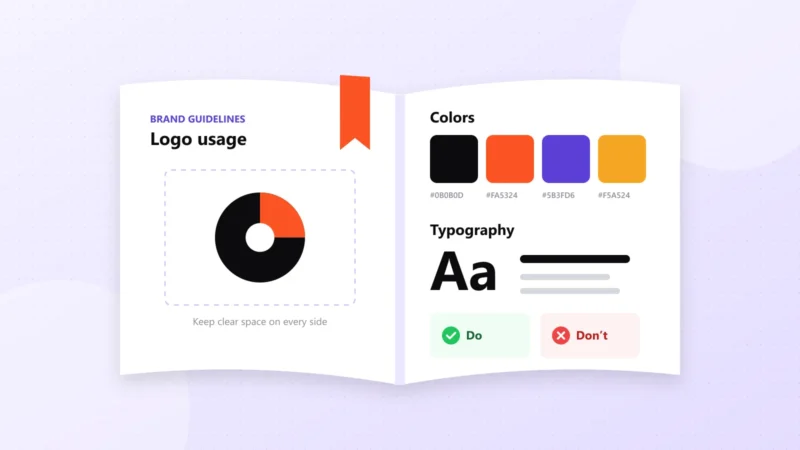
If you have brand guidelines, logos, fonts or a color palette, include them or link to them. At DesignFlux, this happens once during onboarding, and your designer learns your brand on day one so you don’t repeat yourself on every request.
A simple brief template
Copy and paste this for your next request:
- Project: What are we making?
- Goal: What should it achieve?
- Audience: Who will see it, and where?
- Format & size: Dimensions, file type, platform
- Copy: Headline, body, call-to-action
- Must include: Logo, images, links, legal text
- Inspiration: Links or screenshots, plus what you like about them
- Avoid: Styles, colors or ideas that are off-limits
- Deadline: Target date
How to give useful feedback
Even with a great brief, the first version is a starting point. When you review it:
- Lead with what works. It tells the designer what to keep.
- Be specific. “Make the headline larger and move the logo to the bottom right” beats “it feels off.”
- Explain the why. “The price needs to be more visible because that’s our main hook” helps the designer solve the real problem.
- Consolidate feedback. Gather comments from your team into one message so the designer isn’t pulled in different directions.
The payoff
A good brief takes ten minutes to write and can save days of back-and-forth. With an unlimited design subscription, it also means your queue moves faster, because every request lands right the first time.