 DesignFlux Team
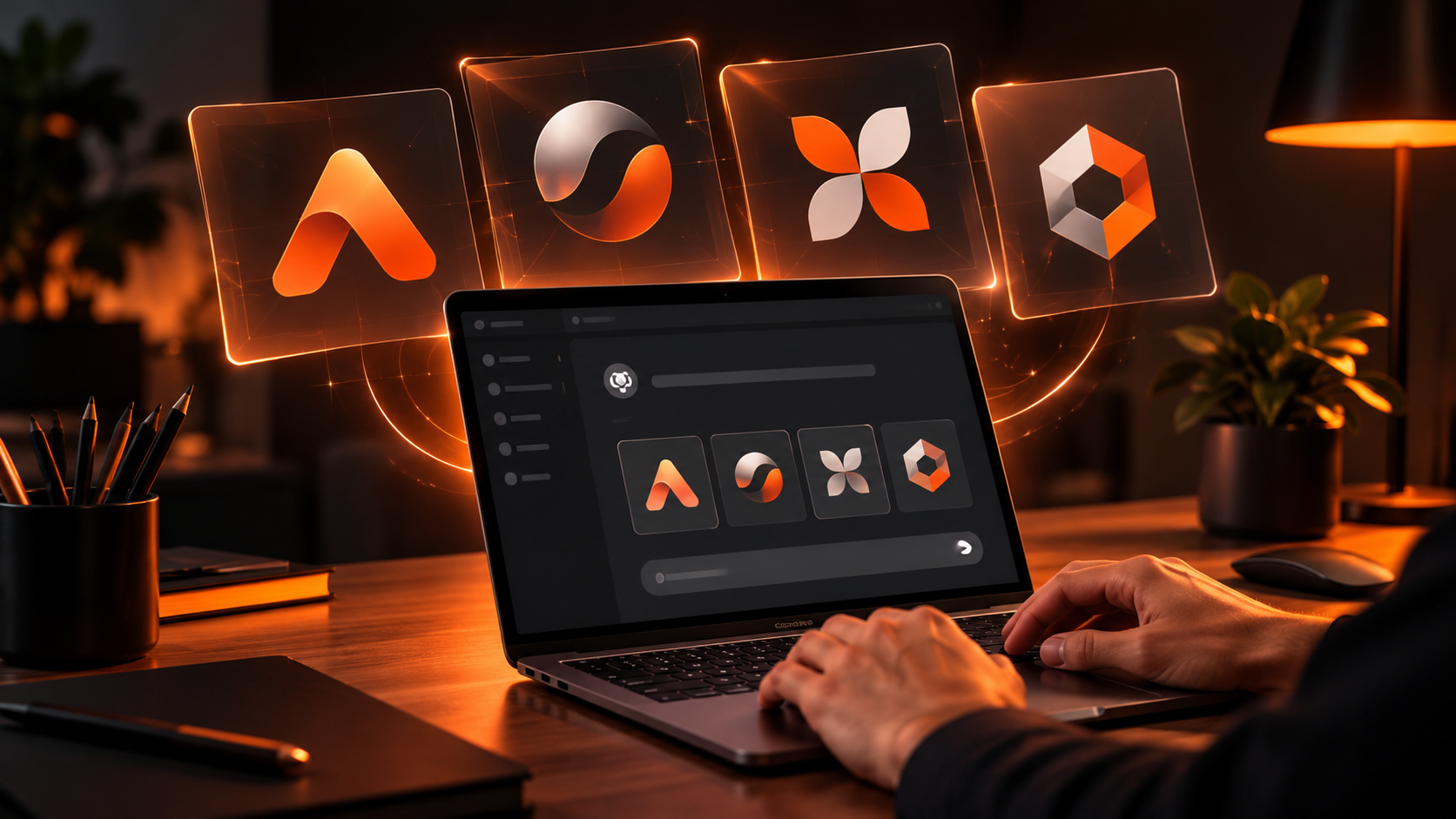
Can ChatGPT create a logo for your business? Yes. ChatGPT can generate logo-style images, explore visual concepts and help you develop ideas without hiring a designer. However, an AI-generated image isn’t necessarily a finished business logo, especially when you need original vector files, a consistent brand identity and clear ownership rights.
For US small business owners, that distinction matters. Your logo might eventually appear on storefront signage, packaging, advertisements, uniforms and thousands of products.
ChatGPT can help you explore what your brand might look like. But should you trust its output as your permanent business identity?
Here’s what ChatGPT can actually produce in 2026, where it falls short and when professional logo design is worth paying for.
Can ChatGPT create a logo for your business?
ChatGPT can generate images that look like logos. You can describe your business, preferred colors, industry and visual style, then request several creative directions.
For example, a landscaping company might ask:
“Create five minimalist logo concepts for a landscaping business called GreenPath. Use forest green and charcoal, explore leaf-inspired geometric symbols, and keep the designs simple enough for vehicle signage.”
ChatGPT can produce visual concepts based on those instructions. You can then request different colors, simpler symbols or alternative compositions.
According to OpenAI’s official image creation documentation, ChatGPT supports image generation, editing, text within images and transparent backgrounds.
These capabilities make it useful for exploring logo ideas without spending hours manually sketching concepts.
However, the output is primarily a generated image, not automatically a complete, production-ready identity package.
What can ChatGPT actually deliver?
- Logo-style images based on written descriptions.
- Multiple visual concepts for brainstorming.
- Suggestions for colors, typography and symbols.
- Alternative compositions and simplified directions.
- Basic logo mockups on business cards or packaging.
- Visual references to share with a professional designer.
These are useful starting points. However, they don’t automatically solve the technical, strategic and legal requirements of a professional business logo.
Where ChatGPT-generated logos fall short
AI-generated logos can look convincing on a screen. Problems often appear when you need to use them across real business applications.
1. Generic or familiar-looking designs
AI frequently produces recognizable design conventions: abstract swooshes, geometric circles, mountain icons, letter combinations and familiar industry symbols.
For example, asking for a technology logo might produce interconnected nodes or circuit-inspired shapes.
Those concepts aren’t necessarily bad. However, they may fail to distinguish your company from competitors.
A professional identity needs more than an attractive symbol. It needs a visual direction that supports your business positioning and gives customers something recognizable.
2. No original vector source files by default
Professional logos typically require editable vector artwork, such as SVG, AI or EPS files.
Vector graphics use mathematical paths, allowing designers to scale logos without losing sharpness.
ChatGPT’s image generation can produce high-quality images, but a generated PNG is not equivalent to an original, professionally constructed vector logo.
Even when a raster image is converted into SVG, that doesn’t automatically produce clean paths, editable typography or a well-organized source file.
These distinctions matter when printing large signs, creating embroidery or preparing professional packaging.
3. Inconsistent results across revisions
Suppose ChatGPT produces a logo you like, but you need the icon slightly narrower and the lettering adjusted.
A new generation might change more than you requested.
The spacing, geometry, typography or proportions may differ from the previous version.
Professional designers can modify specific vector elements while preserving the approved structure.
That control becomes especially important once your business starts using the logo publicly.
4. No complete brand strategy behind the image
ChatGPT can help analyze your audience and suggest branding directions. However, it doesn’t automatically conduct comprehensive market research or validate your positioning.
A professional designer can investigate competitors, discuss customer expectations and explain why a particular identity suits your business.
For example, a premium accounting firm needs different visual signals from a children’s entertainment company.
The best choice isn’t necessarily the prettiest concept. It’s the identity that communicates the right message.
Can ChatGPT create a logo you legally own?
This is one of the most important questions for any business considering an AI-generated logo.
In January 2025, the US Copyright Office published Part 2 of its report on AI and copyrightability.
The report explains that AI-generated material can receive copyright protection when a human contributes sufficient original creative expression. However, providing prompts alone doesn’t make the person entering those prompts the author of the resulting image.
However, copyright and trademark rights are different. An AI-assisted logo may still function as a trademark under appropriate circumstances, depending on its use, distinctiveness and applicable law.
Therefore, don’t assume every AI-generated logo is legally unusable or that every generated design is fully protected.
Before adopting an AI-generated image as a permanent company logo, speak with a qualified US intellectual property attorney.
Trademark and originality risks for AI logos
A logo can look original to you while resembling an existing trademark.
ChatGPT doesn’t guarantee that generated symbols are unique or available for trademark registration.
According to the US Patent and Trademark Office’s trademark clearance guidance, businesses should search for potentially conflicting marks before filing an application.
That research should go beyond looking for identical logos.
Two marks can create confusion through similar appearances, meanings or overall commercial impressions.
For example, a generated mountain symbol might resemble an existing outdoor equipment brand, even if the company names differ.
A trademark attorney can help assess potential conflicts and explain your registration options.
A logo that your business cannot confidently use and protect is a weak foundation for long-term branding.
When using ChatGPT for a logo makes sense
ChatGPT is valuable when you treat it as a creative exploration tool rather than a guaranteed final identity solution.
Early brainstorming
If you’re starting a business and haven’t chosen a visual direction, AI-generated concepts can help you identify preferences.
You might discover that you prefer typography-based logos over detailed illustrations, or geometric symbols over literal industry icons.
Testing branding directions
Generate a few alternative approaches and compare them with your competitors.
For example, explore a minimal wordmark, a monogram and a symbol-based identity before selecting a direction for professional development.
Temporary mockups and presentations
AI concepts can help you visualize how an identity might appear on a business card, storefront or website.
However, clearly label these as exploratory concepts rather than finalized brand assets.
This approach lets you communicate preferences before investing in finished design work.
When you should hire a professional logo designer
Professional design becomes more important when a logo will represent your business publicly for years.
This includes customer-facing branding, trademark applications, retail packaging, physical signage, uniforms and merchandise.
These applications require accurate files, consistent proportions and dependable reproduction.
For example, a small logo on a website might hide technical imperfections that become obvious on a storefront sign.
A professional designer can test the identity at different sizes and make adjustments before production.
If your business is investing in packaging, advertising and long-term brand recognition, paying for a complete identity system can help avoid expensive redesigns later.
ChatGPT logo vs. professional logo design
| Feature | ChatGPT-generated concept | Professional logo package |
|---|---|---|
| Visual concepts | AI-generated options | Original concepts developed from a brief |
| Brand strategy | Suggestions based on your input | Research and informed creative direction |
| Vector files | Not included by default | Editable vector artwork |
| Revisions | Image regeneration and editing | Controlled adjustments to approved artwork |
| Brand guidelines | Can suggest rules | Defined color, typography and usage system |
| Ownership | AI-specific copyright uncertainty | Contractual rights transfer for eligible original work |
| Trademark readiness | No clearance guarantee | Can support preparation, with separate legal review |
Neither option automatically guarantees trademark registration. Professional designers also cannot promise that every proposed mark is legally available.
However, a professional process gives you greater control over the artwork, deliverables and ownership arrangements.
What should a professional logo package include?
Before hiring a designer, ask for a written list of deliverables.
- Original logo concepts: Creative directions based on your business requirements.
- Primary and alternate logos: Horizontal, stacked and simplified variations where appropriate.
- Vector source files: Properly constructed, editable artwork suitable for scaling.
- Color and typography system: Approved colors, font choices and practical usage rules.
- Revision process: Clearly defined opportunities to refine the selected concept.
- Ownership transfer: Written assignment of eligible intellectual property rights, with any third-party limitations disclosed.
For businesses requiring ongoing marketing design beyond the initial logo, DesignFlux offers an unlimited graphic design subscription at $1,495 per month.
The service includes a dedicated designer and project manager, unlimited requests and revisions, typical 24 to 48 hour turnaround for most requests, and no contracts. Production follows a request queue, so complex identity work may require additional time.
If you’re evaluating the broader impact of AI on creative work, you can also read our article about whether AI will replace graphic designers.
How to use ChatGPT before hiring a designer
Start by describing your business, target customers, competitors and preferred visual personality.
Then request three different logo directions rather than asking for dozens of unrelated designs.
Compare the results and identify specific elements you like: typography, symbol structure, color or overall simplicity.
Next, prepare a short design brief that includes those preferences, along with examples of what to avoid.
Share the brief with your designer and explain that the AI images are inspiration, not artwork to copy directly.
Finally, request original vector construction, appropriate brand variations and a clear rights agreement.
This workflow helps you benefit from AI’s speed while keeping human creativity and professional accountability in the final design.
Frequently asked questions
Can ChatGPT create a logo for free?
Yes, ChatGPT offers image generation on its free tier, subject to applicable usage limits. You can create logo-style concepts, explore symbols and test visual directions without necessarily paying for a designer. However, generating an image doesn’t automatically provide original vector artwork, trademark clearance or copyright ownership.
Can I use a ChatGPT-generated logo commercially?
Commercial use may be permitted under the applicable service terms, but permission to use an image doesn’t automatically mean you own exclusive copyright or trademark rights. Before adopting an AI-generated logo, review the provider’s terms, investigate potential trademark conflicts and seek legal advice when the identity matters commercially.
Can I trademark a logo created by ChatGPT?
Potentially, yes. Trademark eligibility depends on factors such as distinctiveness, commercial use and conflicts with existing marks, rather than simply whether AI assisted the design process. However, registration isn’t guaranteed, and copyright ownership raises separate questions. Consult a qualified trademark attorney before filing or investing heavily in the mark.
Does ChatGPT provide SVG or vector logo files?
ChatGPT’s image generation primarily produces rendered images rather than professionally constructed, editable vector artwork. Although other tools can sometimes convert generated images into SVG files, conversion doesn’t guarantee clean paths or production-ready typography. A professional designer can rebuild and refine a selected concept as proper vector artwork.
Should I use ChatGPT or hire a logo designer?
Use ChatGPT for brainstorming, testing visual directions and preparing references when you’re exploring ideas. Hire a professional designer when the logo will become your permanent customer-facing identity, especially for trademark registration, product packaging or signage. The two approaches can complement each other rather than compete.
The bottom line
So, can ChatGPT create a logo for your business? Yes, it can generate useful visual concepts and help you explore branding ideas quickly.
However, an attractive AI-generated image isn’t automatically an original, legally protectable, technically complete business logo.
For brainstorming and temporary mockups, ChatGPT can be a practical tool. For a permanent identity that needs vector files, consistent branding and clear rights, professional design and appropriate legal review remain worthwhile investments.