 DesignFlux Team
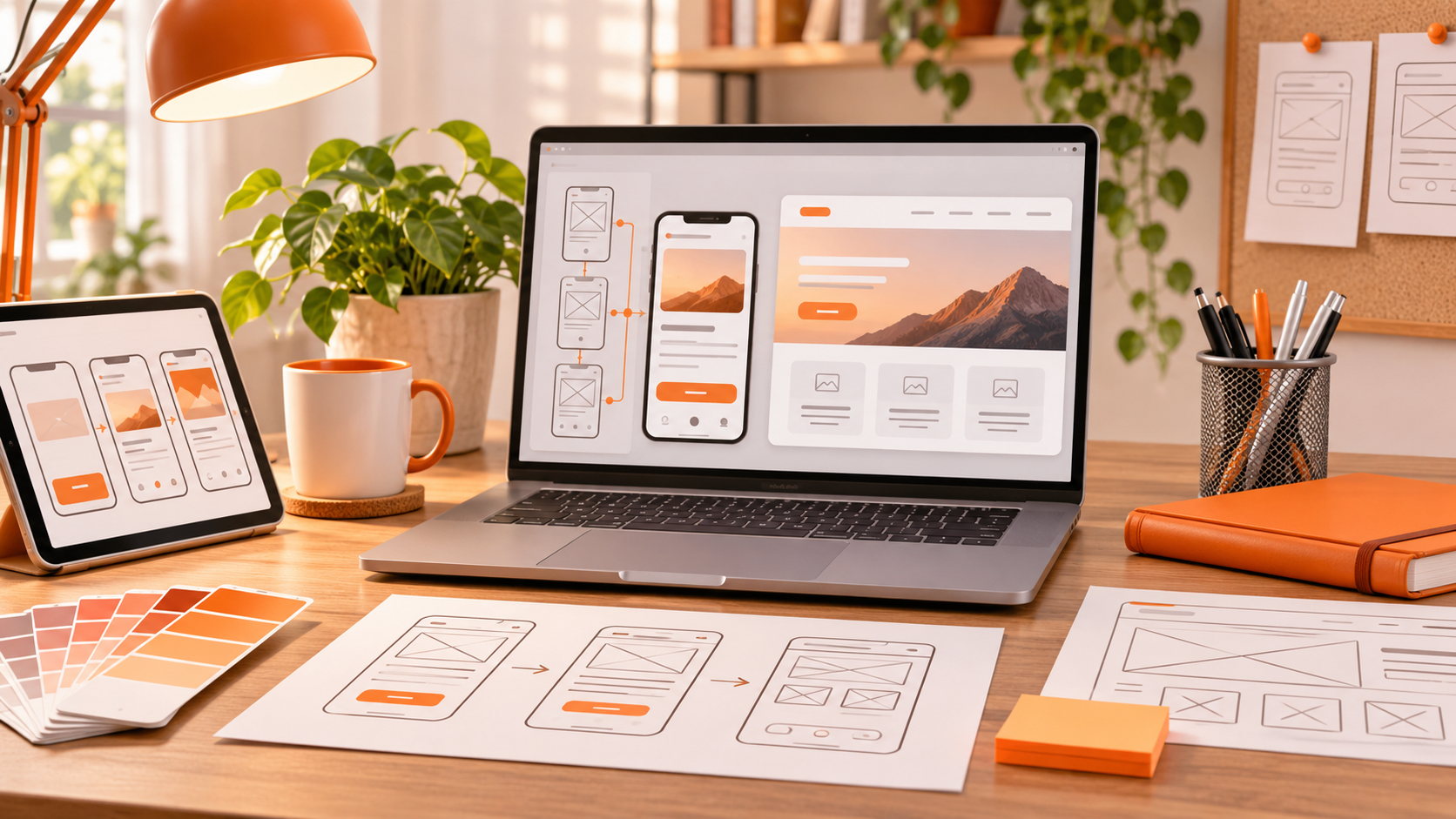
UI UX design cost depends on whether your business needs a quick interface refresh, a researched website experience, or a complete app design project. The answer is not a single price, because designers can charge by the hour, by the project, by the screen, or through an ongoing service. This guide explains what each approach usually covers, what can raise or lower the price, and how a small business can compare quotes without buying work it does not need.
A clear brief helps you avoid the most common pricing problem: comparing two quotes that describe different work. One quote may cover research and testing, while another covers only final screens. Before you ask for a price, define the users, the tasks they need to complete, and the pages or screens involved. That definition makes the UI UX design cost easier to compare and easier to control.
The figures in this guide are limited on purpose. Upwork lists graphic designer rates of $15 to $150 per hour, but that is not a verified UI/UX specialist rate. The practical way to budget is to separate research, interface design, testing, and development. A business that needs only a small website refresh should not expect the same scope as a business launching a new app.
What UI/UX Design Actually Includes
User experience (UX) concerns how people move through a product and complete tasks. User interface (UI) concerns the visual controls, layouts, typography, and feedback they see. Strong projects connect the two: a clear journey, then a visual design that supports it.
Many small businesses ask for UI work when they really need UX work as well. For example, a checkout page may look polished but still confuse customers because the steps are unclear. A designer should explain which parts of the work are research, which are structure, and which are visual design.
Research and discovery
A designer may interview customers, review your current website, assess competitor patterns, or map customer journeys. Research can prevent expensive changes later, but it should produce decisions, not only a report. Ask what questions the research will answer and how the findings will change the design.
User flows and wireframes
User flows show the steps people take to book an appointment, request a quote, or complete checkout. Wireframes then turn those steps into simple layouts without final colours or images. This stage is useful because it exposes missing steps, unclear labels, and unnecessary screens before visual design begins.
Visual UI and design systems
Visual interface design establishes spacing, type, colours, buttons, forms, navigation, and responsive behaviour. A design system can keep those choices consistent across pages and screens. For a business website, this might include service pages and enquiry forms. For an app, it might include onboarding, account screens, and task flows.
Prototypes and usability testing
A clickable prototype lets stakeholders explore a proposed experience before development. Usability testing then observes real people trying the main tasks. This stage can reveal confusing labels, hidden actions, or steps that take too long. It is often cheaper to fix those issues in a prototype than after development.
UI UX Design Cost: Freelancer Rates and Project Fees
Freelance pricing can follow hourly billing, a fixed project fee, or an agreed series of milestones. Hourly work can suit a small change, while a fixed fee can suit a defined set of screens. Milestones can help both sides agree on what will be delivered at each stage.
The Upwork graphic designer pricing guide publishes $15 to $150 per hour for graphic designers generally. This is a broad adjacent benchmark, not an established UI/UX rate. Dedicated UX researchers, product designers, and interaction specialists may price their work differently, because their responsibilities and deliverables are not the same as general graphic design.
Ask freelancers to estimate the work in phases: discovery, wireframes, visual screens, prototype, testing, and handover. A quote that lists only a total price makes it hard to see whether research or testing is included. Also ask how revisions are handled, what files you will receive, and whether the price includes responsive layouts.
Agency UI/UX Design Pricing
An agency may combine UX research, interface design, content strategy, accessibility review, and project management. That can suit a business that needs several skills in one team, but it also adds coordination and overhead.
Agency proposals vary too widely to present a trustworthy universal cost using the supplied benchmarks. Instead, ask an agency for a statement of work explaining its team, discovery process, design milestones, revision policy, and handover. Compare that scope with a freelancer quote on the same screens and tasks, rather than comparing headline prices alone.
UI UX Design Cost Per Screen: Website vs Mobile App
Per-screen pricing sounds straightforward, but designers do not always define a screen the same way. One designer may count each unique layout, while another counts every responsive variation and interaction state. Agree on the definition before you compare prices.
| Scope | Website UI work | Mobile app UI work |
|---|---|---|
| Main views | Home, service, contact, checkout or account pages | Onboarding, core tasks, account and settings screens |
| Variations | Desktop and mobile responsive layouts | Device sizes, operating-system patterns and orientations |
| Interaction states | Forms, navigation, errors and confirmations | Permissions, loading, empty, offline and error states |
| Research focus | Finding information and completing enquiries or purchases | Repeat use, navigation, gestures and task completion |
| Sensible quote basis | Unique templates plus responsive and interaction states | Unique flows plus screens, states and platform requirements |
A useful quote identifies unique layouts, reused components, responsive variations, and interaction states separately. Otherwise, a low per-screen price may exclude the work that makes the interface usable.
For broader implementation budgets, see our website design cost guide and app design cost guide. Those topics include considerations beyond ongoing UI/UX hiring, such as the wider website or app project. Do not confuse interface design files with a developed, tested and launched product.
What Drives UI/UX Design Costs Up or Down?
Scope and number of user journeys
A simple brochure website may have familiar navigation. A booking platform may involve availability, confirmations, cancellations, and account management. Map the core journeys before counting screens, because hidden workflows often create the biggest changes in scope.
Research depth
Existing customer feedback can support a focused redesign. A new product with uncertain user behaviour may need interviews, prototypes, and usability sessions. Research has value when it changes decisions, but it should not become a vague line item without defined deliverables.
Complex components and accessibility
Dashboards, filters, detailed forms, permissions, and unusual interactions require extra thought. Designers also need to consider keyboard navigation, contrast, readable text, and feedback for errors. Ask how accessibility considerations enter the design and testing process rather than leaving them entirely to developers.
Revisions and stakeholder feedback
Frequent changes to approved flows can affect many linked screens. Agree on feedback rounds, decision makers, and deadlines before design begins. A clear approval process can keep revisions focused and reduce repeated work.
Developer collaboration
Designers may need to document component behaviour, responsive rules, and interactions for the developer. That handover can reduce questions and rework during development. Ask whether the quote includes design files, specifications, and support during build, or whether those are separate.
Ongoing UI/UX Work and Subscription Pricing
Launching a design does not end the work. Businesses update forms, introduce features, improve confusing screens, and create new landing pages. Ongoing design can be useful when those changes are regular but do not justify a full-time hire.
DesignFlux offers an unlimited graphic design subscription for $1,495 per month, with a dedicated designer and project manager, unlimited requests and revisions, typical 24 to 48 hour turnaround, and no contracts. Requests follow a managed queue, so unlimited requests do not mean unlimited simultaneous work. A subscription may suit continuing eligible interface graphics, visual refinements, and supporting design work, but it is not the same as hiring a full product team for research and development.
The US Bureau of Labor Statistics reported a $58,910 median annual wage for graphic designers in May 2023. Using the supplied assumption that benefits represent 30 percent of total compensation, that corresponds to about $84,200 annually, or roughly $7,000 monthly. This is an illustrative employer-cost comparison for graphic design, not a UX salary or a direct substitute for a designer quote.
How to Choose the Right UI/UX Option
Start with your business decision, not the provider category. Are customers abandoning an enquiry form, struggling to book, or failing to complete checkout? Then request proposals that identify the users, research methods, screens, states, prototype detail, testing, revisions, and handover. That comparison is more useful than a single hourly rate.
Be careful with AI-generated interfaces. They may accelerate visual exploration, but they do not establish ownership or test whether users understand the design. The US Copyright Office’s January 2025 report explains that prompts alone do not provide sufficient human authorship for copyright in generated outputs. A designer should also confirm who owns the final files and whether the work can be used commercially.
Choose a freelancer for a clearly defined improvement, an agency when you need coordinated research and design, and an ongoing service when you have regular visual work. Ask each provider the same questions, compare equivalent scopes, and confirm the revision and handover terms before you agree a price.
Frequently Asked Questions
How much does a UX designer cost per hour?
UX specialist rates vary with research responsibilities, experience, and project complexity. Upwork lists $15 to $150 per hour for graphic designers generally, so that range is not a verified UX rate. Ask for a phased estimate, including research, screens, prototype, and testing, so you can compare equivalent scopes.
What is the average salary for a UX designer in the US?
A verified UX-specific average is not established by the sources used here, so it would be misleading to present one. Salaries vary with location, industry, experience, and whether the role focuses on research, product design, or interaction design. As a nearby benchmark, the US Bureau of Labor Statistics reported a $58,910 median annual wage for graphic designers in May 2023.
How much does UI/UX design cost for a mobile app?
Mobile app UI/UX pricing depends on the user journeys, unique screens, interaction states, research, prototyping, and testing required. Apps often need onboarding, account, permission, loading, empty, offline, and error states. Ask for a quote that separates those items, so a low screen count does not hide the work required.
Is UI/UX design worth the cost for a small business?
It can be worthwhile when confusing navigation, forms, or workflows make important tasks difficult. Clear layouts can help customers find information, complete enquiries, and finish purchases with less friction. The value depends on whether the redesign solves a defined problem and whether the improvement is measured after launch.
Should I pay per screen or per project?
Per-screen pricing can work for a well-defined set of straightforward layouts, but it may omit responsive variations, interaction states, research, and usability testing. Per-project pricing can include those stages when the scope is clear. Compare proposals on the same list of screens, states, and deliverables.
Final Thoughts
The right UI UX design cost depends on the problem, research needs, interface complexity, and level of ongoing support. Avoid buying a fixed package before you know the journeys, screens, states, and tests required. For a small business, the best starting point is a clear brief, comparable proposals, and an explicit agreement on what success looks like after launch.